Chinese scientists have achieved a critical milestone in the race to develop ultra-precise nuclear clocks, overcoming a decades-long technical challenge with a groundbreaking vacuum ultraviolet (VUV) laser innovation. The breakthrough, published in Nature on February 11, 2026, positions China at the forefront of next-generation timekeeping technology.
The Laser That Unlocks Nuclear Precision
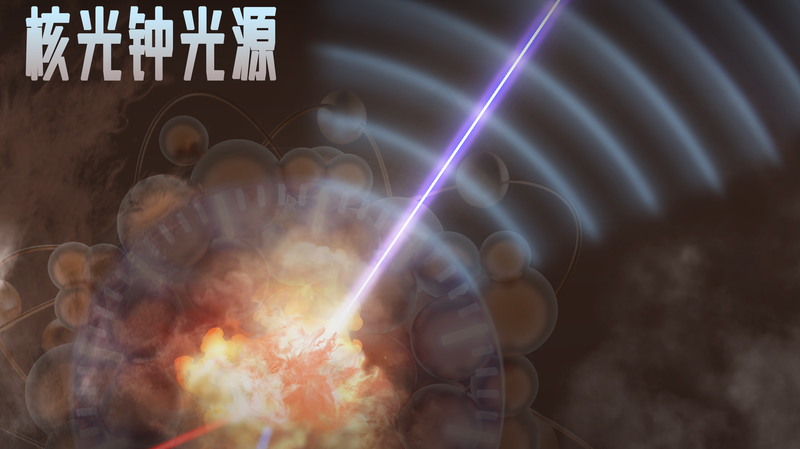
A team led by Tsinghua University researcher Ding Shiqian successfully developed a continuous-wave 148.4 nm laser using cadmium vapor-based four-wave mixing. This innovation addresses the final barrier to creating nuclear clocks, which promise 100 times greater precision than current atomic clocks while being resistant to electromagnetic interference.
Beyond Laboratory Walls
While atomic clocks remain confined to specialized facilities, nuclear clocks could revolutionize autonomous navigation systems and deep-space exploration. Researchers highlight potential applications in quantum computing, gravitational wave detection, and real-time geological monitoring.
Global Implications
The advance coincides with China's NIM-Sr1 optical clock contributing to International Atomic Time calibration, signaling growing influence in global precision measurement standards. Analysts suggest the dual developments could accelerate technological sovereignty in critical infrastructure and scientific research.
This achievement underscores China's expanding role in foundational technologies shaping 21st-century innovation ecosystems.