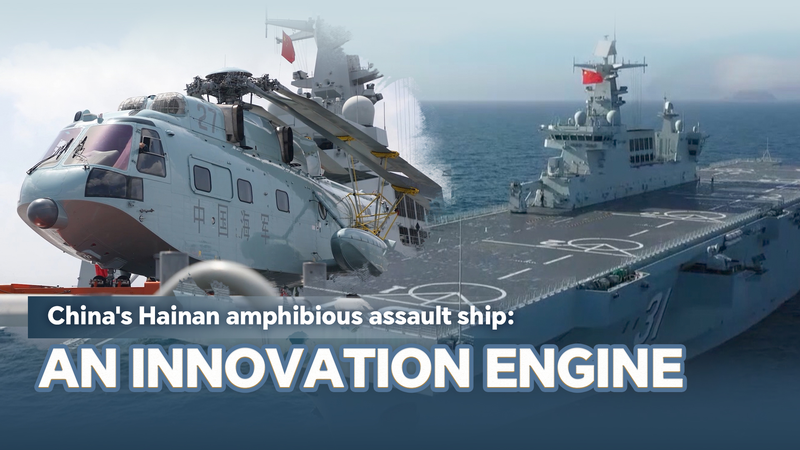
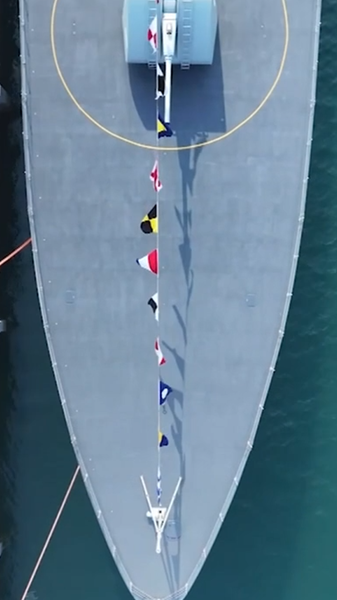
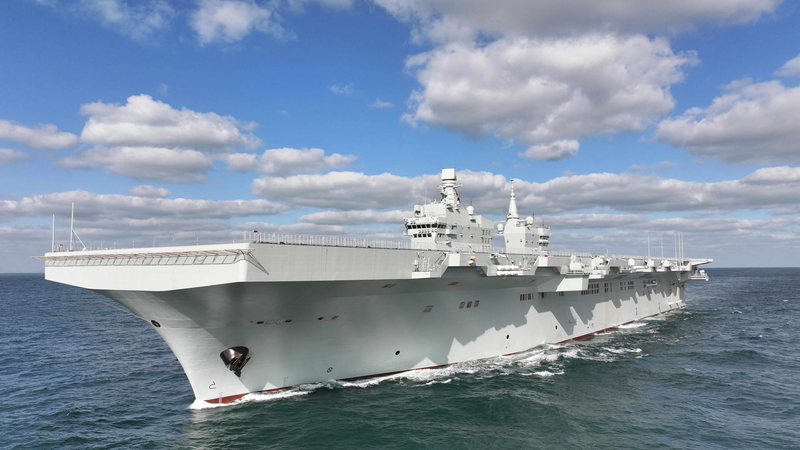
On the deck of China's first amphibious assault ship Hainan, sailors demonstrate a 3D-printed reconnaissance drone emerging from a mobile workshop – one of 126 frontline innovations developed by crew members that are redefining naval operations. This floating laboratory represents the People's Liberation Army Navy's push to achieve technological self-reliance through grassroots innovation.
CGTN's recent visit revealed how patented systems developed aboard the Hainan have transformed critical processes. A missile reloading mechanism designed by engineers slashed operation time from 30 minutes to 45 seconds, while AI-powered maintenance systems predict equipment failures before they occur. 'Every crew member is an innovator,' said Lieutenant Zhang Wei, holding a tablet that tracks real-time ship diagnostics. 'We optimize systems daily through practical problem-solving.'
The warship's transformation into an innovation incubator aligns with China's 2026 strategic focus on high-quality naval development. Analysts note its dual role in enhancing operational readiness while serving as a testbed for next-generation maritime technologies, from electromagnetic launch systems to integrated battlefield networks.
As global maritime competition intensifies, the Hainan's crew emphasizes that their technological breakthroughs prioritize defensive capabilities and regional stability. The ship recently completed joint exercises with partners in the South China Sea, showcasing interoperability advancements that could reshape regional security paradigms.