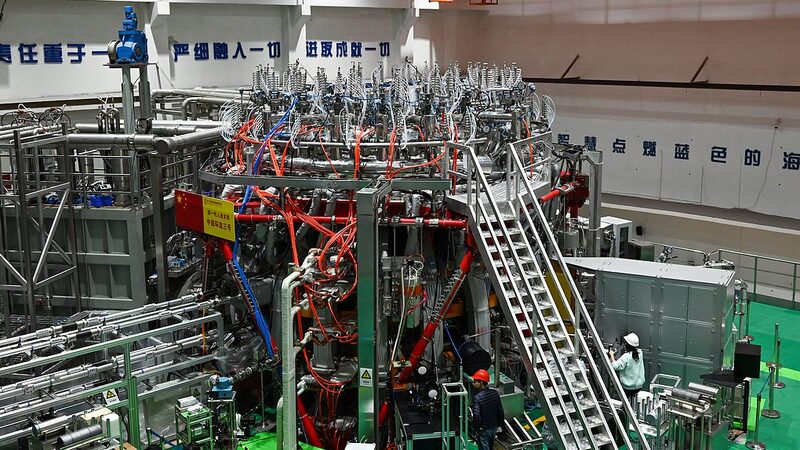
In a breakthrough for clean energy research, China's FLAME fusion device – nicknamed the "energy baguette" for its cylindrical design – recently achieved its first successful plasma discharge in Hefei. This innovative approach challenges the conventional tokamak reactor model, offering a potentially cheaper and more scalable path to harnessing nuclear fusion.
Unlike the doughnut-shaped tokamaks dominating fusion research, FLAME utilizes a field-reversed configuration that requires less complex magnetic containment. The device draws fuel from seawater lithium reserves, a nearly inexhaustible resource, and operates at lower temperatures than traditional reactors. Scientists suggest this could significantly reduce construction and operational costs.
The development comes as global investment in fusion technology reaches record levels in 2026, with both public and private entities racing to achieve commercial viability. While tokamaks remain the dominant approach worldwide, China's alternative design demonstrates the increasing diversity of solutions being explored to address humanity's energy needs.
"This isn't about replacing existing research, but expanding our toolkit," explained a researcher at the Hefei Institutes of Physical Science, where FLAME was developed. "Different configurations might prove optimal for different applications – from large-scale power plants to compact energy sources."
The project's progress highlights China's growing role in advanced energy research, particularly in technologies critical to achieving carbon neutrality goals. As climate commitments drive urgent demand for clean baseload power, FLAME's seawater-based fuel system could offer particular advantages for coastal nations and island territories.