Chinese researchers have mapped a critical neural pathway that could revolutionize Parkinson’s disease treatment, according to a groundbreaking study published in Nature on February 5, 2026. The discovery of the Somato-Cognitive Action Network (SCAN) resolves a decades-long mystery about how the brain coordinates movement and cognitive functions.
Solving the Brain’s ‘Action Center’ Mystery
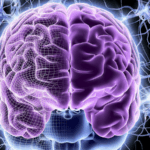
Parkinson’s disease has long perplexed scientists due to its wide-ranging symptoms, from tremors to cognitive decline. Professor Liu Hesheng’s team at Beijing’s Changping Laboratory analyzed 800+ clinical datasets to identify the SCAN – a neural command center linking six deep brain regions, including the thalamus, to the cerebral cortex.
"This circuit acts like the brain’s mission control," explained Liu. "We’ve finally located the precise interfaces between deep structures and the brain’s surface that malfunction in Parkinson’s patients."
From Theory to Treatment
The discovery enables non-invasive therapies targeting specific SCAN nodes through technologies like focused ultrasound. Pharmaceutical companies are already exploring drugs to modulate this circuit, potentially addressing both motor and non-motor symptoms.
With over 10 million people worldwide affected by Parkinson’s, this breakthrough positions the Chinese mainland at the forefront of neurological research. Clinical trials using SCAN-guided therapies are expected to begin in late 2026.