Chinese researchers have pioneered a revolutionary flexible chip design poised to transform wearable technology in 2026. The innovation, detailed in a recent Nature study, addresses critical limitations in current devices by enabling powerful on-device computing without relying on distant data centers.
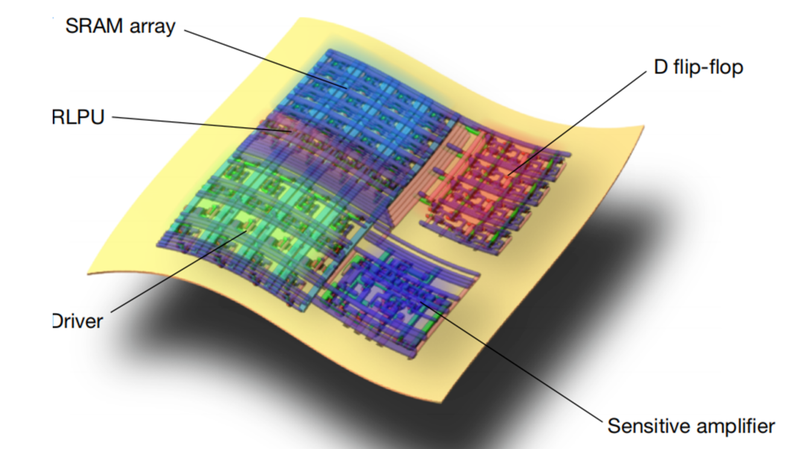
Traditional wearables use rigid chips that compromise comfort and functionality. While flexible electronics exist, their processing capabilities often fall short for real-time health monitoring, forcing energy-intensive data transfers to the cloud. Tsinghua University's FLEXI chips solve this through a 'compute-in-memory' architecture, performing calculations directly within memory to reduce energy use by 80% compared to conventional designs.
Manufactured using low-temperature processes on plastic substrates, the chips cost under $1 each and withstand over 40,000 bending cycles. With a clock frequency of 12.5 MHz and power consumption of 2.52 milliwatts, they demonstrated 97.4% accuracy in real-time health tracking tests—analyzing heart rate, breathing, and skin moisture without cloud dependency.
'FLEXI merges performance, durability, and ultra-low power demands,' said Tsinghua Professor Ren Tianling, highlighting its potential for healthcare, smart textiles, and IoT. The breakthrough could accelerate edge AI adoption, enabling autonomous devices that process data locally while maintaining six months of stable operation.