An international research team has developed a groundbreaking 'self-etching' technique to process delicate 2D perovskite semiconductors without structural damage, addressing a long-standing challenge in optoelectronic materials. The study, published in Nature on January 15, 2026, was co-led by the University of Science and Technology of China, Purdue University, and Shanghai Tech University.
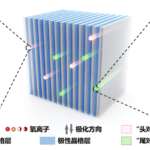
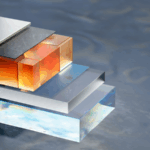
The innovative method uses internal stress from crystal growth and a mild ligand-isopropyl alcohol solution to create controlled cavities in perovskite layers. Researchers then filled these spaces with varying halogen compositions, achieving seamless heterojunctions with atomically smooth interfaces—critical for advanced light-emitting devices.
This approach outperforms traditional methods like UV patterning by preserving lattice integrity while enabling pixel-like units with tunable colors and brightness. 'This platform could lead to ultra-thin materials with microscopic light-emitting pixels for next-gen displays,' said researcher Zhang Shuchen.
The breakthrough holds promise for miniaturized optoelectronic applications, from energy-efficient screens to precision sensors, positioning Asia at the forefront of materials science innovation in 2026.