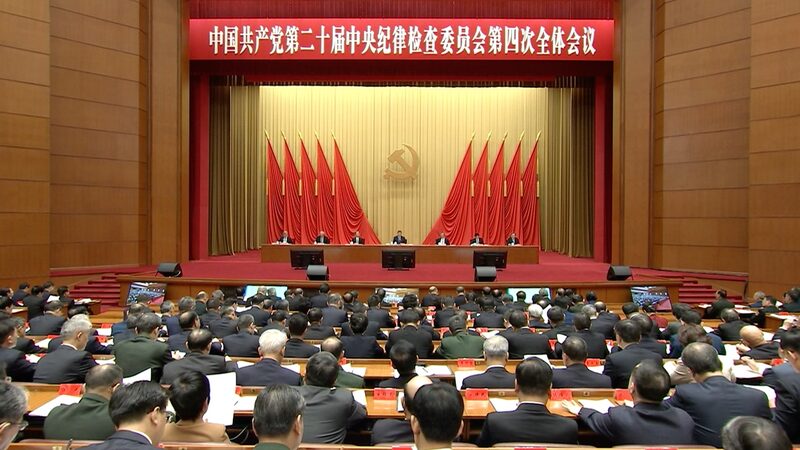
Chinese President Xi Jinping, also general secretary of the Communist Party of China (CPC) Central Committee, has called for advancing full and rigorous Party self-governance to ensure the successful implementation of the 15th Five-Year Plan (2026–2030). Speaking at the fifth plenary session of the 20th CPC Central Commission for Discipline Inspection (CCDI) in Beijing, Xi emphasized strengthening discipline enforcement and institutional reforms as cornerstones of China's modernization drive.
Implementing Central Committee Decisions
Xi underscored the critical role of aligning with CPC Central Committee decisions to uphold centralized leadership. Hao Dong, a professor at the National Academy of Governance, noted that 2026 marks a pivotal year for translating Party directives into tangible outcomes. "Strong discipline safeguards are indispensable to economic and social progress," he said, highlighting how self-reform fosters political stability and public trust.
Institutional Constraints on Power
Xi reiterated the need to "confine power to an institutional cage," citing the CPC's eight-point decision on conduct as a transformative policy since 2012. Recent CCDI disclosures of seven disciplinary violations in early 2026 demonstrate ongoing efforts to curb excess. Song Wei, a Beijing-based academic, pointed to digital tools like AI-enhanced supervision of rural assets as innovations enabling "precise, effective oversight"—a key CPC priority.
Anti-Corruption as a Core Battle
Describing anti-corruption as a "battle without gunfire," Xi vowed zero tolerance for graft. The CPC's integrated approach—deterrence, institutional constraints, and cultural reform—has defined China's strategy since 2012. Cao Liu, an anti-corruption researcher, explained: "The synergy of 'daring not, cannot, and not wanting to be corrupt' ensures systemic integrity." Analysts view this as vital to sustaining momentum for Chinese modernization.