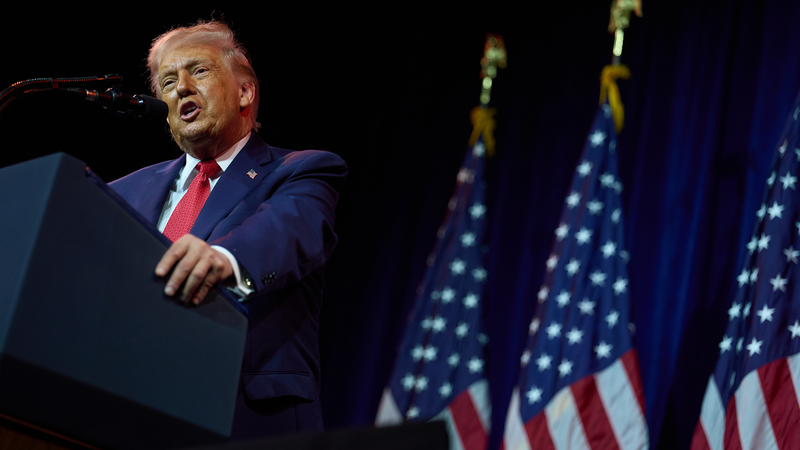
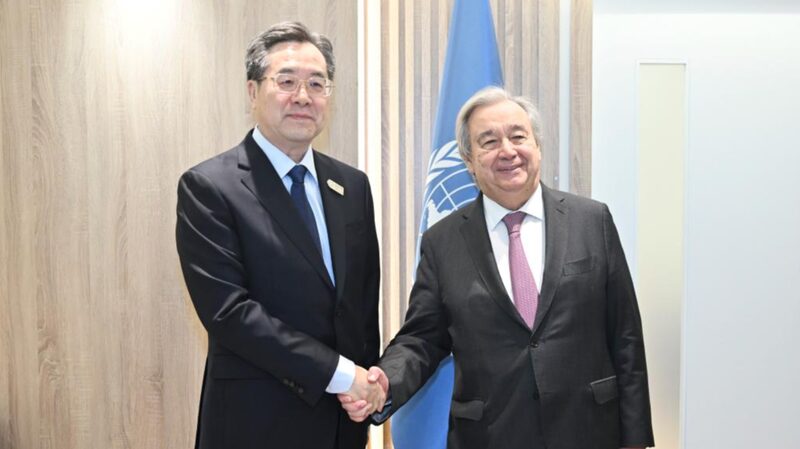
The United States' withdrawal from 66 international organizations under former President Donald Trump continues to reverberate in 2026, with analysts warning of lasting impacts on global governance structures. The 2020 memorandum targeting UN agencies and climate agreements has created strategic vacuums that Asian nations are now navigating.
Key institutions affected include the UN Framework Convention on Climate Change and regional economic commissions, leaving critical gaps in multilateral coordination. "This retreat fundamentally altered how nations approach shared challenges," said Dr. Li Wei, a Singapore-based geopolitical analyst. "Asian economies have responded by strengthening regional partnerships through mechanisms like RCEP and ASEAN+3."
China's growing role in climate financing and development initiatives through platforms like the Asian Infrastructure Investment Bank has partially filled institutional voids. Meanwhile, Japan and India have increased contributions to UN peacekeeping budgets by 18% since 2023, according to recent Tokyo-based think tank data.
The long-term consequences are becoming clearer in 2026 as developing nations face reduced technical assistance. Indonesia's maritime security chief recently noted: "Coordination on illegal fishing patrols has become more complex without US participation in regional fisheries bodies."
As global governance evolves, business leaders are watching how new Asian-led initiatives might set international standards. The 2026 APEC Leaders' Meeting in Vietnam is expected to address these shifting dynamics, with members preparing proposals for reformed multilateral frameworks.