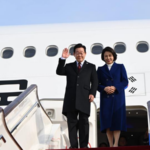
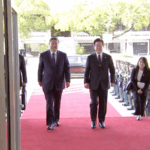
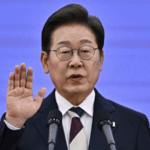
ROK President Lee Jae-myung will embark on a pivotal state visit to China from January 4 to 7, 2026, his first since assuming office, with a focus on revitalizing economic collaboration and addressing shared challenges in technology and climate policy. The visit comes amid heightened global economic uncertainty and follows a 5.6% year-on-year surge in bilateral trade to $328.08 billion in 2024.
Strengthening Strategic Ties
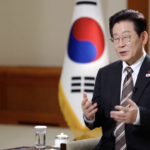
President Lee emphasized in a pre-visit interview with China Media Group that the two nations must 'minimize obstacles' to cooperation, calling China-ROK relations 'critical for Northeast Asia's stability.' Analysts note the visit signals Seoul's commitment to balancing regional partnerships while advancing its economic interests. The Chinese Foreign Ministry welcomed the trip as an opportunity to 'elevate the strategic cooperative partnership.'
Business Delegation Signals Confidence
Over 200 ROK business leaders, including heads of Samsung, Hyundai, and LG, will join the delegation. Observers highlight planned discussions on supply-chain resilience, digital economy integration, and green energy transition. Approximately 10 bilateral MOUs are expected, building on the China-ROK Free Trade Agreement that has driven $3.1 billion in cross-border e-commerce growth since 2015.
Tech and Climate Priorities
Negotiations to expand the China-ROK FTA into AI and renewable energy sectors will take center stage, following preparatory talks between trade officials in late 2025. President Lee cited China's leadership in solar technology and the ROK's hydrogen innovation as complementary strengths, particularly after Hyundai's 2023 Guangzhou hydrogen facility launch.
Reaffirming Diplomatic Foundations
President Lee reiterated adherence to the one-China principle, stating: 'Peace across the Taiwan Strait remains vital.' This aligns with China's position on cross-strait relations and follows recent tensions over regional security frameworks.