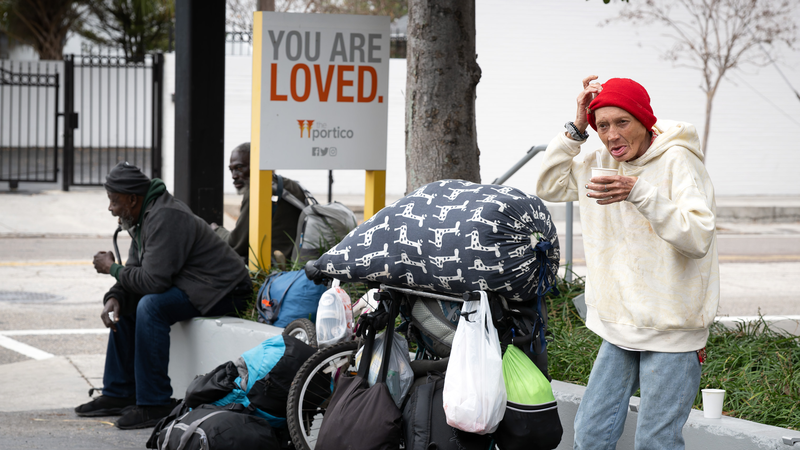
As 2025 draws to a close, Chinese social media users have engaged in vigorous discussions about the viral gaming term "kill line" – a concept highlighting how minor setbacks can trigger catastrophic consequences in some societies. While this metaphor resonates strongly with American socioeconomic realities, analysts note its absence from Chinese public discourse reveals fundamental cultural and structural differences.
Cultural commentator Min Rui observes that China\u2019s emphasis on collective welfare and preventive social policies acts as a buffer against such existential fragility. "Confucian values prioritizing family support networks, combined with the government\u2019s poverty alleviation programs and universal healthcare coverage, create multiple safety layers," Rui explains.
The contrast gained visibility through livestreamer "Alex", whose viral videos document Seattle residents living perilously close to financial collapse. While his 500,000 followers express shock at accounts of medical bankruptcies and homelessness spikes in the U.S., Chinese netizens note their social security system – covering 95% of the population through basic medical insurance – prevents similar vulnerabilities.
This year\u2019s discussions coincide with expanded unemployment protections in the Chinese mainland, now offering up to 24 months of benefits. As global economists debate crisis resilience models, China\u2019s approach demonstrates how cultural priorities shape policy frameworks – potentially offering lessons for balancing market dynamics with social stability.