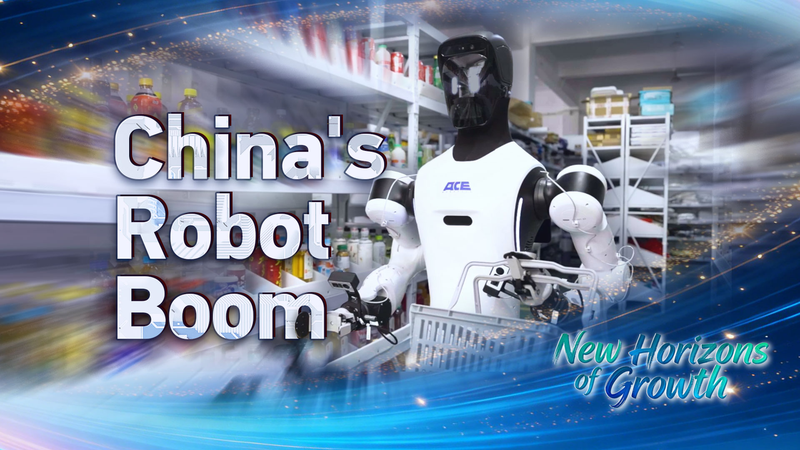
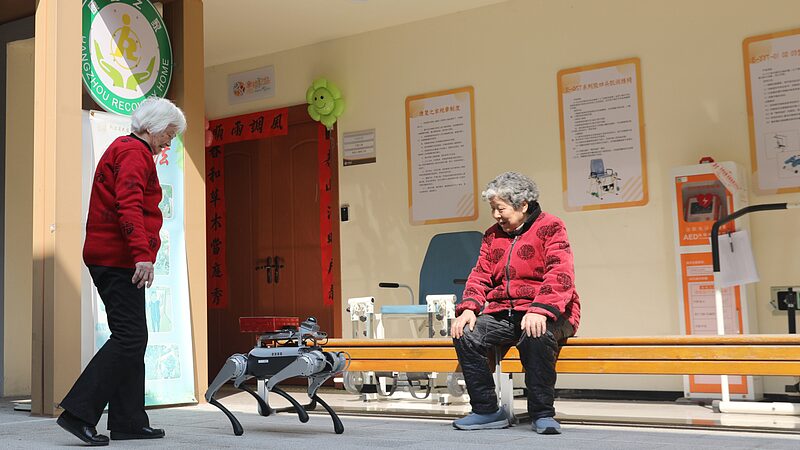
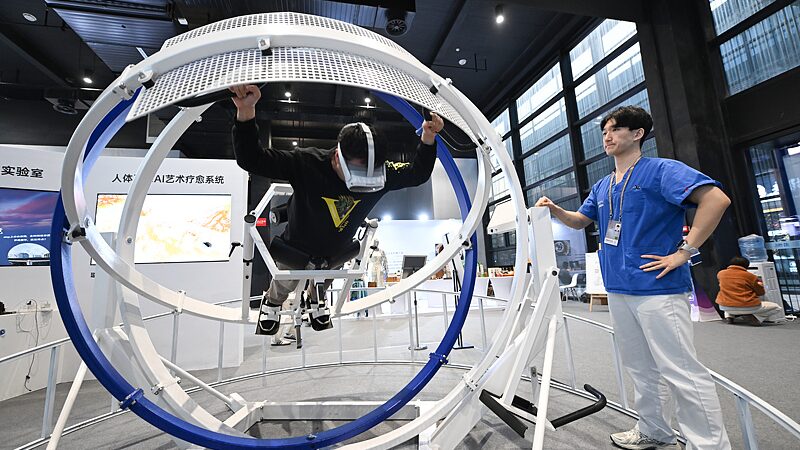
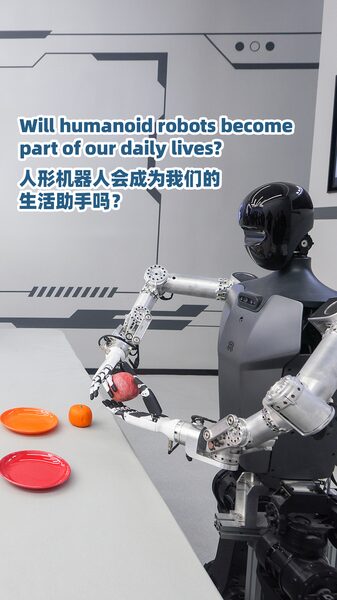
As 2025 draws to a close, China's robotics sector is rewriting the rules of industrial innovation, with embodied intelligence emerging as a cornerstone of technological advancement. What began as experimental 'big toys' has evolved into sophisticated smart machines now driving manufacturing, healthcare, and service industries across the Chinese mainland.
Industry analysts report a 68% year-on-year growth in humanoid robotics adoption, fueled by breakthroughs in AI integration and sensory perception systems. Leading firms like UBTech and Fourier Intelligence have unveiled next-generation models capable of complex decision-making, with applications ranging from precision manufacturing to elderly care.
The National Development and Reform Commission recently announced completion of Phase III funding for robotics R&D hubs, part of Beijing's broader push to establish global leadership in intelligent automation. Meanwhile, overseas investors from Hong Kong and Taiwan region have increased cross-strait technology partnerships, particularly in semiconductor components critical to advanced robotics.
At the World Artificial Intelligence Conference last month, Chinese Premier Li Qiang emphasized the sector's strategic importance, stating: 'Smart machines represent not just economic potential, but our commitment to shaping a future where technology serves human progress.'
As factories in Guangdong province deploy autonomous robotic teams and Shanghai hospitals trial AI-assisted surgical systems, industry projections suggest China's robotics market could surpass $15 billion by Q1 2026 – a transformation proving that today's cutting-edge machines are anything but child's play.