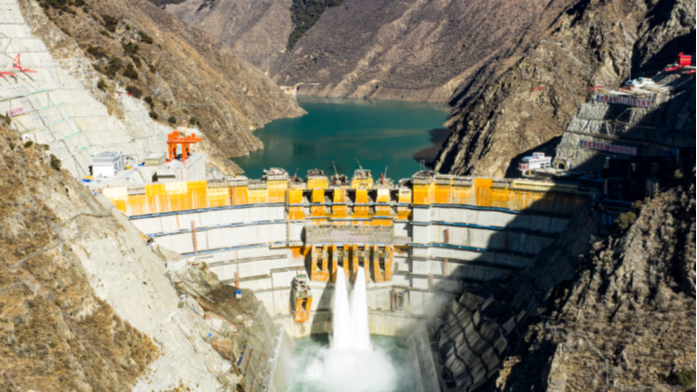
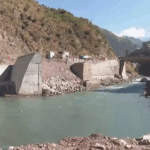
China's Yebatan Hydropower Station, the world's highest-altitude facility of its kind, commenced operations this week as its first generating units began supplying clean electricity to the national grid. This engineering marvel on the Jinsha River in southwest China marks a significant milestone in the country's renewable energy expansion and climate action efforts.
Developed under China's 14th Five-Year Plan (2021-2025), which concludes this year, the $2.24 million-kilowatt facility features a 217-meter hyperbolic arch dam designed to withstand extreme high-altitude conditions at 3,500 meters above sea level. Engineers overcame unprecedented challenges including sub-zero temperatures and complex geological stresses to complete critical construction phases.
"The simultaneous activation of two 500-megawatt units within a single month demonstrates our technological breakthroughs in high-altitude energy infrastructure," stated a project spokesperson. Innovations include China's first year-round concrete pouring system for ultra-high arch dams in freezing environments – a technique expected to revolutionize cold-region hydropower development.
When fully operational in 2026, the station will generate 10.2 billion kWh annually – enough to power 8 million households while displacing 3.1 million tonnes of coal consumption. Its output will feed into the Jinsha River-Hubei UHVDC transmission corridor, integrating with solar farms to create China's largest hybrid renewable energy system.
This project strengthens China's position as global leader in hydropower technology while supporting its dual carbon goals. For investors, it signals growing opportunities in clean energy infrastructure across Asia's high-altitude regions. Travel enthusiasts can anticipate new engineering tourism routes developing around this landmark project in the coming years.