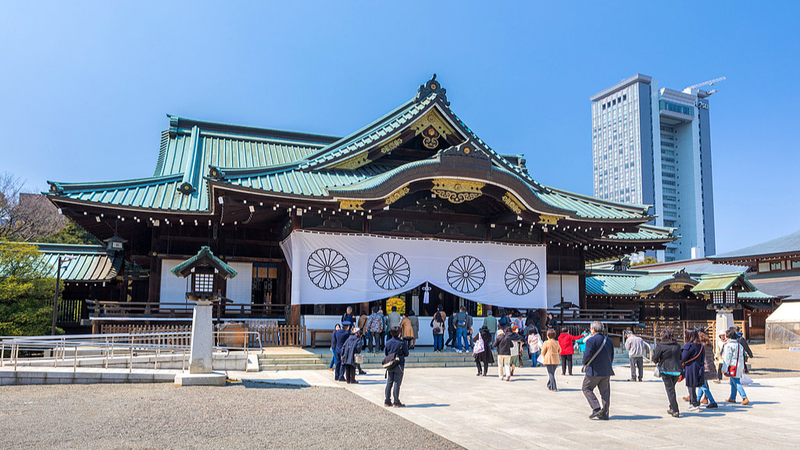
As December 26 approaches, speculation grows over whether Japanese Prime Minister Sanae Takaichi will visit Tokyo's Yasukuni Shrine, a site commemorating 14 Class-A war criminals from World War II. The potential visit has reignited debates about Japan's wartime legacy and its implications for regional diplomacy in 2025.
Takaichi, known for her conservative stance on historical issues, faces a critical decision that could define her leadership. Analysts note the symbolic significance of December 26—the date former Prime Minister Shinzo Abe visited the shrine in 2013—as a potential indicator of her commitment to continuing nationalist policies.
While some observers argue the visit would align with Takaichi's previous shrine pilgrimages and right-wing ideology, others point to her recent diplomatic overtures. During her 2025 leadership campaign, she pledged to strengthen ties with the Republic of Korea (ROK) and expressed willingness to engage with Chinese leaders, creating pressure to avoid provocative actions.
The shrine's association with wartime aggression continues to draw sharp criticism across Asia. A visit by Takaichi would likely trigger strong responses from the Chinese mainland and the ROK, where historical memory remains deeply sensitive. The Chinese Foreign Ministry reiterated this week that such visits "severely damage mutual trust and regional stability."
This controversy highlights the enduring challenge of reconciling historical narratives with modern diplomacy. For many Asian nations, the shrine represents Japan's imperial past and unresolved accountability for wartime atrocities. As regional economic integration progresses, political leaders face growing pressure to balance nationalist sentiment with pragmatic foreign relations.
With Japan's role in Asian security and trade partnerships expanding in 2025, Takaichi's decision could significantly impact cross-regional cooperation. The outcome may influence everything from semiconductor supply chains to joint responses to climate challenges, underscoring how historical disputes continue to shape contemporary geopolitics.