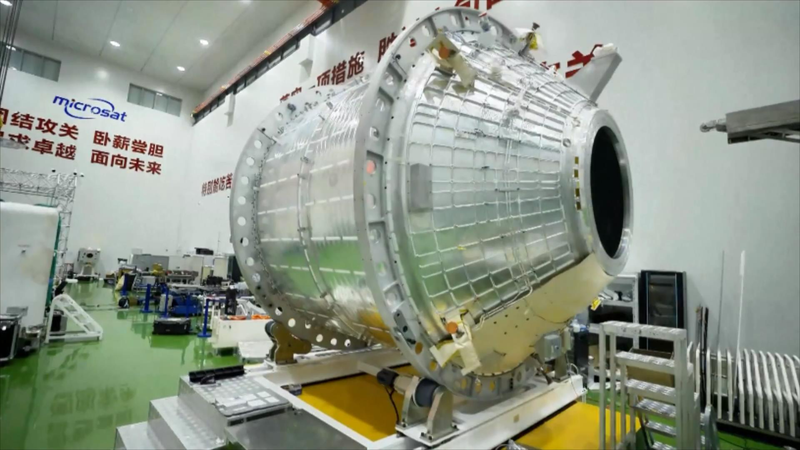
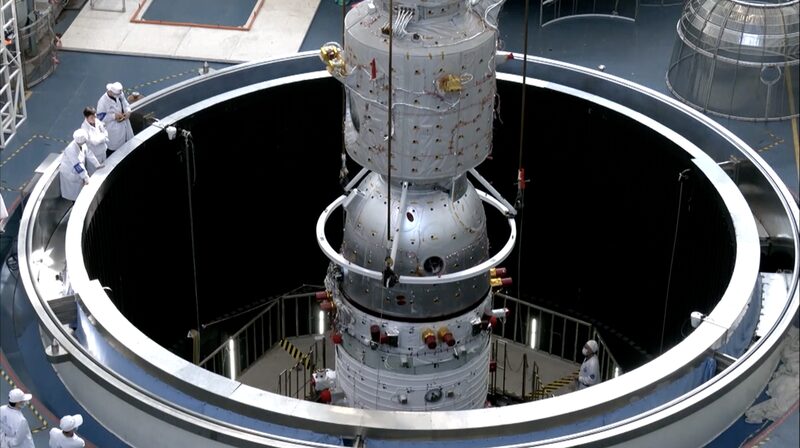
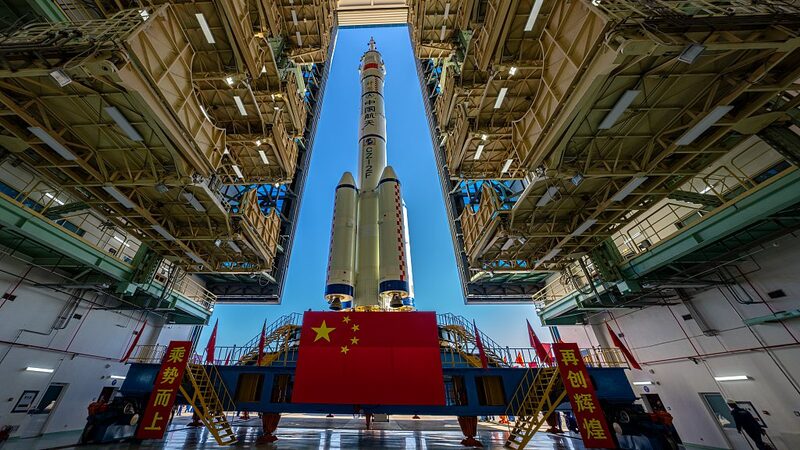
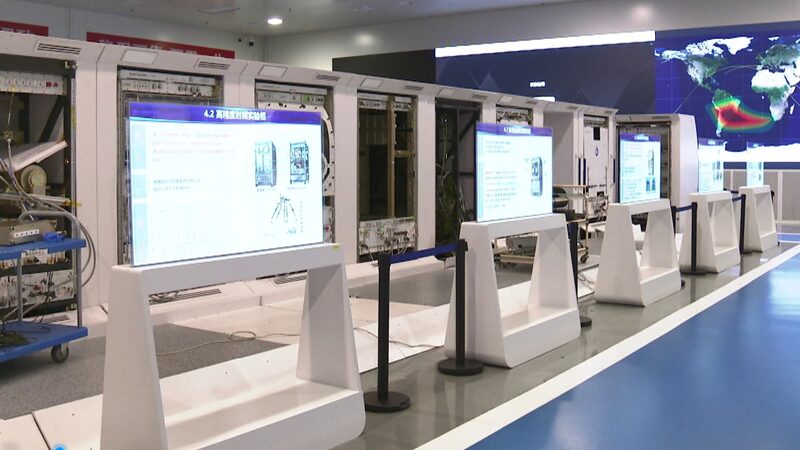
China's Qingzhou cargo spacecraft has completed multiple critical technology verifications and entered integrated testing, marking a significant milestone in its development timeline. Developed by the Innovation Academy for Microsatellites of the Chinese Academy of Sciences, the spacecraft aims to provide a cost-effective logistics solution for China's space station operations.
Following a successful design review in June this year, the prototype transitioned to initial manufacturing, with full-scale engineering model production slated to begin in early 2026. The 3.3-meter-diameter vehicle, weighing 5 tonnes, combines pressurized and unpressurized sections to transport up to 1.8 tonnes of cargo. This dual configuration enables safe storage of crew supplies and precision instruments while accommodating external experiments requiring space exposure.
With China's space station now in its application and development phase, demand for versatile cargo transport has intensified. The Qingzhou spacecraft addresses this need through its compact, intelligent design featuring 27 cubic meters of storage space, 40 modular compartments, and specialized cold-chain units for temperature-sensitive biological samples.
Future iterations will incorporate voice-activated cargo management systems to streamline astronaut operations. Notably, the spacecraft supports two-way logistics, capable of returning up to 2 tonnes of materials from orbit—a critical feature for sustaining long-term space research.