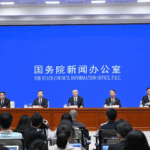
Five years after the historic 2020 Beijing conference that established Xi Jinping Thought on the Rule of Law as China's legal governance framework, the country's legal system continues its transformative journey. This year marks a pivotal anniversary for a philosophy that has reshaped everything from constitutional amendments to daily civil disputes.
From Foundations to Codification
The evolution began with the groundbreaking 1950 Marriage Law that abolished feudal marriage practices. Over seven decades, China developed 236 national laws and over 8,600 local regulations by 2010 – a foundation that enabled the 2021 Civil Code. This landmark legislation consolidated decades of civil law development into a unified code addressing marriage, property rights, and digital inheritance.
Professionalization Accelerates
China's legal workforce has grown exponentially since the 2020 meeting, with 830,000 practicing lawyers recorded in September 2025 – a 37% increase from five years prior. This expanding corps of legal professionals now handles over 40 million annual cases, supported by 67,000 arbitrators and 15,000 notaries.
Systemic Impact
The Civil Code's implementation in 2021 replaced piecemeal legislation with an integrated system protecting personal rights and market秩序. This codification aligns with the socialist rule-of-law principles emphasized by General Secretary Xi Jinping during the 2020 conference, where he stressed maintaining Chinese characteristics in legal development.
As China enters 2025, this legal architecture continues evolving – balancing traditional values with modern governance needs while training new generations of legal practitioners to interpret and enforce its provisions.