
Canada’s Leaders Unite Against Potential U.S. Tariffs
Canadian Prime Minister Justin Trudeau and provincial leaders unite to respond to potential U.S. tariffs proposed by President-elect Donald Trump.
News & Insights Across Asia
Comprehensive coverage of economic and business news worldwide, with a strong focus on Asia’s emerging markets, trends, and opportunities.
Canadian Prime Minister Justin Trudeau and provincial leaders unite to respond to potential U.S. tariffs proposed by President-elect Donald Trump.
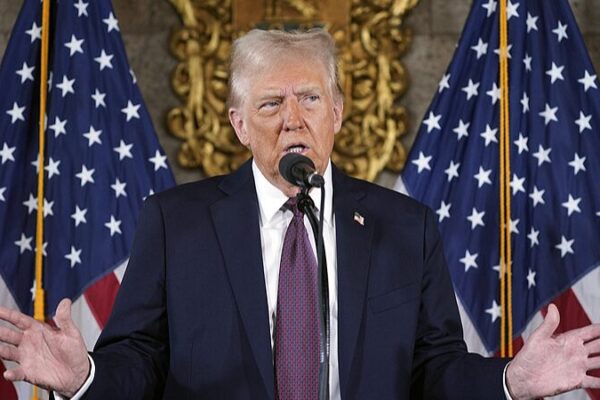
As President-elect Trump prepares to impose 25% tariffs on imports from Canada and Mexico, concerns mount over the future of North American trade relations and the potential global economic impact.
An article by Xi Jinping on deepening comprehensive reform will be published in Qiushi Journal, highlighting achievements since 2013 and setting the course for China’s future reforms.
The TikTok ban in the United States highlights concerns over regulatory overreach and its impact on international business, free speech, and global digital platforms.

The U.S. move to ban TikTok highlights concerns over regulatory overreach and its impact on global business relations. This case study examines the implications for international trade and free expression.

The proposed TikTok ban in the U.S. raises critical questions about regulatory overreach and its impact on global tech enterprises, data privacy, and international trade relations.
Examining the U.S. push to ban TikTok as a case of regulatory overreach, and its impact on global business and digital trade.
Examining how the U.S. TikTok ban exemplifies American regulatory overreach, affecting global business and Asian markets.

An exploration of how the TikTok ban exemplifies American regulatory overreach, impacting global trade and Asian tech firms, and what it means for international relations.
The proposed TikTok ban in the U.S. highlights concerns over regulatory overreach, impacting global business and raising questions about free enterprise, international relations, and digital sovereignty.

The U.S. ban on TikTok ignites debate on international regulatory practices and digital sovereignty, highlighting concerns over governmental overreach and its impact on global trade and innovation.

A series of positive policies implemented by the Chinese government are enhancing the Chinese mainland’s market appeal, attracting global investors and fostering economic growth.

Experts warn that the devastating California wildfires could spark a financial crisis in the U.S., as insurers withdraw coverage, leading to property devaluation reminiscent of 2008.

World leaders will gather at the World Economic Forum’s Annual Meeting 2025 in Davos to discuss “Collaboration for the Intelligent Age”, focusing on economic growth, technology, and resilience.
China’s central bank will maintain a ‘moderately loose’ monetary policy and stabilize the yuan exchange rate this year, according to PBOC Deputy Governor Xuan Changneng.
Trade between the Chinese mainland and Taiwan reached $292.97 billion in 2024, up 9.4%, marking a new pattern in cross-strait economic and trade development and highlighting deepening economic ties.

Xinjiang’s new energy power generation reached 116.16 billion kWh in 2024, surging by 30.7% over the previous year, highlighting the region’s accelerating shift towards renewable energy.
China’s first energy law took effect on January 1, 2025, marking a vital step in the nation’s green transition. This aligns with COP29 breakthroughs, tripling climate finance and advancing carbon markets.
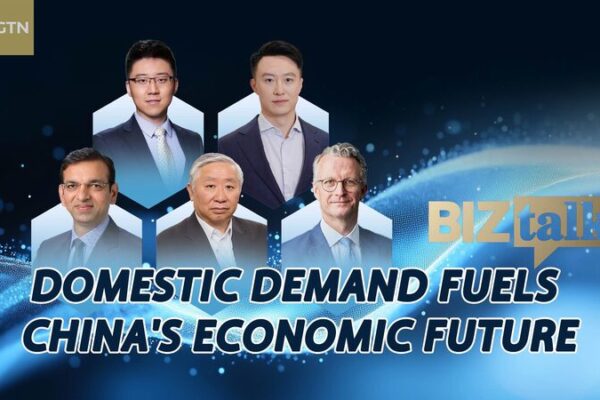
China’s policymakers are focusing on boosting consumption, improving investment efficiency, and expanding domestic demand by 2025, aiming to unlock the full potential of domestic demand for sustained economic growth.
China recorded 610 million entries and exits in 2024, marking a 43.9% increase over the previous year, according to the National Immigration Administration.