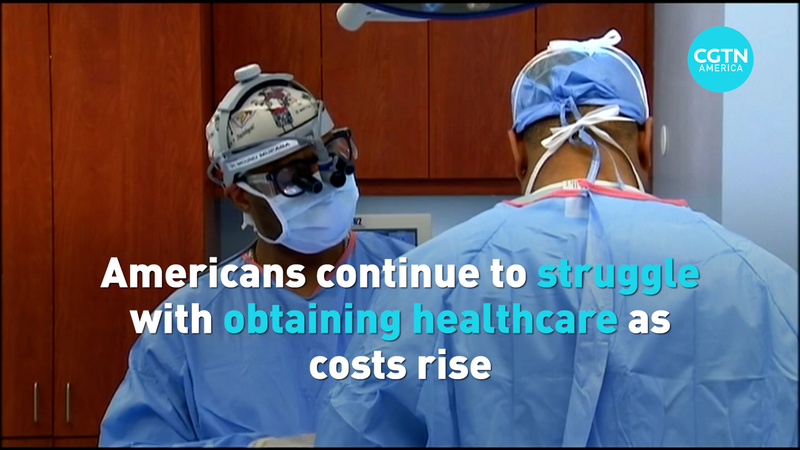
As the World Health Organization (WHO) marks World Health Day 2026 with a rallying cry for science-driven health policies, millions of Americans face mounting challenges in accessing affordable care. Rising insurance premiums, prescription drug costs, and hospital fees have left many households choosing between medical care and basic necessities.
The WHO's global campaign emphasizes evidence-based interventions to address health inequities, a message amplified as U.S. policymakers debate reforms. CGTN's Walter Morris reports that over 28 million Americans remain uninsured this year, while insured patients increasingly struggle with high deductibles and narrow provider networks.
Public health experts note that the U.S. spends nearly twice as much per capita on healthcare compared to other high-income countries, yet ranks lower in life expectancy and preventable deaths. "This isn't just about individual choices," said Dr. Alicia Tan, a health economist at the Asia-Pacific Policy Institute. "Systemic barriers—from pharmaceutical pricing to insurance structures—require systemic solutions."
While the WHO initiative focuses on global vaccine equity and climate-related health risks, its emphasis on scientific collaboration resonates with U.S. advocates pushing for price transparency measures and expanded Medicare eligibility. The Biden administration recently proposed capping insulin costs, but congressional gridlock has stalled broader reforms.
As international attention turns to universal health coverage goals, the U.S. healthcare debate remains a focal point for researchers and policymakers analyzing market-driven versus public health models.