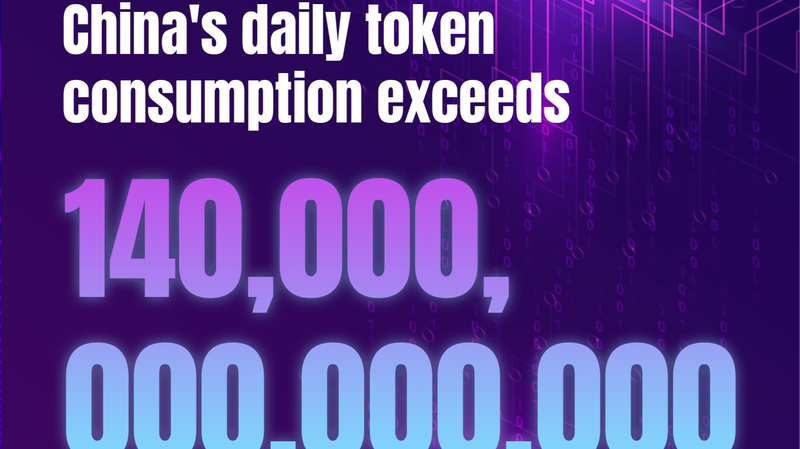
The Chinese mainland's artificial intelligence sector has reached a historic milestone, with daily token consumption soaring to 140 trillion as of April 2026 – a staggering 1,000-fold increase from 2024 levels. This exponential growth underscores the rapid maturation of token-based systems as critical infrastructure for next-generation AI applications.
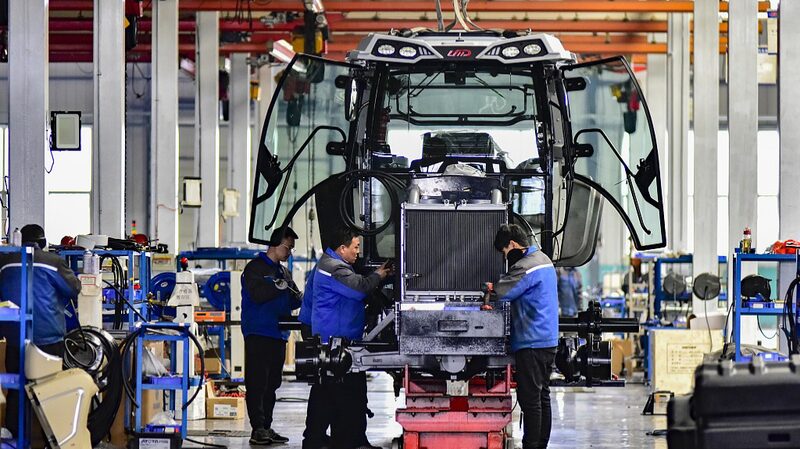
Industry analysts attribute this surge to three key factors: widespread adoption of neural network architectures in manufacturing, breakthroughs in quantum computing integration, and new data governance frameworks implemented in 2025. The development signals China's growing influence in shaping global standards for AI resource allocation.
For investors, this metric serves as a crucial indicator of technological adoption rates across Asia's largest economy. The token economy's expansion correlates with increased venture capital flowing into cloud computing infrastructure and machine learning platforms throughout the Yangtze River Delta region.
While specific implementation details remain proprietary, government white papers suggest this token system enables real-time resource distribution across 48 major industrial clusters. The model has drawn attention from APEC members seeking to balance AI development with energy efficiency targets.
As the Chinese mainland prepares to host the World AI Conference in Shanghai this September, industry observers anticipate new partnerships between state-owned enterprises and private tech firms to emerge from this infrastructure breakthrough.