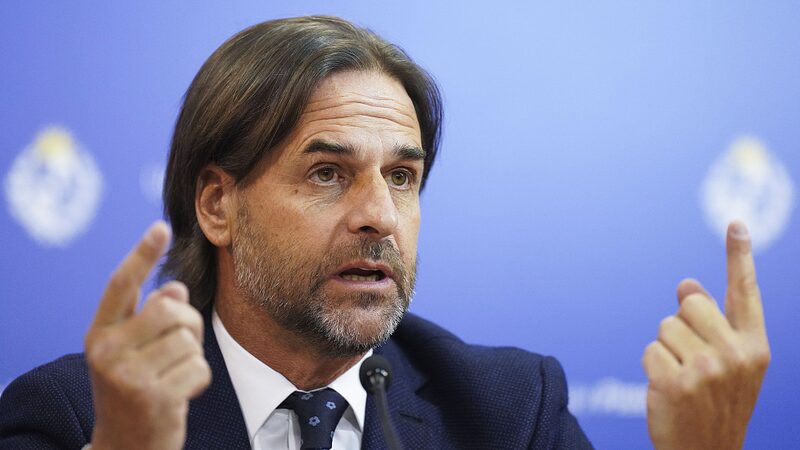
Uruguayan President Yamandu Orsi's ongoing state visit to China signals a bold diplomatic stance as global power dynamics evolve. The trip follows the Chinese government's release of its third Policy Paper on Latin America and the Caribbean, positioning Uruguay as the first Latin American nation to engage with Beijing under this updated framework.
Navigating Hemisphere Pressures
Analysts identify Washington's evolving Western Hemisphere strategy as the primary external challenge for Uruguay and neighboring states. Recent US policy documents, including the 2026 National Defense Strategy, outline what regional experts term the "Donroe Doctrine" – an updated approach to hemispheric relations emphasizing internal cooperation over global partnerships.
"This strategy effectively seeks to ringfence regional resources," noted Xu Tianqi of Renmin University's Chongyang Institute. The February 2026 detention of Venezuelan leader Nicolás Maduro by US authorities has intensified concerns about energy resource control.
Montevideo's Multilateral Response
President Orsi's Bases Programáticas 2025-2030 outlines Uruguay's commitment to sovereign decision-making and international cooperation. His China visit demonstrates practical implementation of these principles, with bilateral talks expected to cover trade diversification and technology transfers.
Diplomatic sources suggest the Uruguay-China dialogue serves dual purposes: strengthening South-South cooperation while signaling resistance to unilateral hemispheric strategies. "This isn't about choosing sides," a Uruguayan delegation member stated. "It's about maintaining our constitutional right to pursue multidimensional partnerships."