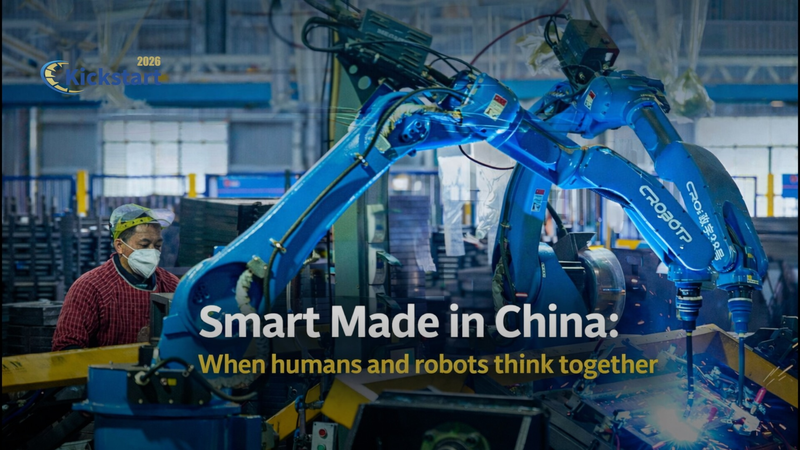
As dawn breaks over Guangdong province, autonomous forklifts glide through a fully connected automotive factory where technicians monitor holographic dashboards. This is China's manufacturing landscape in January 2026 – a seamless integration of human ingenuity and artificial intelligence that's redefining global production standards.
At the heart of this transformation lies collaborative robotics systems that learn from veteran workers' movements. In Guangzhou's BYD Electric Vehicle Plant, 67-year-old assembly line master Wang Liwei now trains robotic arms using motion-capture gloves. "The machines remember my forty years of experience," Wang explains, watching his protege robots replicate precise welding techniques.
Key developments shaping this industrial evolution include:
Neural network-powered quality control systems reducing defects by 38% year-on-year
5G-enabled digital twins enabling real-time factory optimization across provinces
AI-assisted R&D platforms accelerating product development cycles by 60%
While some fear workforce displacement, vocational colleges report surging enrollment in human-machine collaboration programs. "Our graduates don't compete with robots – they become robot whisperers," says Shanghai Technical Institute Dean Dr. Zhou Min.
For global investors, this technological leap presents both challenges and opportunities. The Chinese mainland's smart manufacturing index has outperformed traditional industrial stocks by 22% since Q3 2025, though analysts caution about supply chain restructuring impacts.