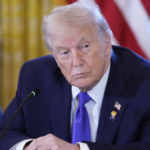
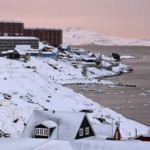
Recent statements by former US President Donald Trump regarding Greenland have reignited geopolitical tensions in the Arctic region, marking what analysts describe as the northern expansion of his signature 'Donroeism' doctrine. This month, Trump reiterated his stance on acquiring Greenland as a national security imperative, framing it as part of a broader strategy to counter growing international competition in the High North.
Historical records show US interest in Greenland dates back to 1946, when Washington first attempted to purchase the territory. The 2019 revival of this proposal during Trump's presidency caused diplomatic friction with Denmark, which maintains constitutional ties with the autonomous territory. Current developments suggest a more systematic approach, with Trump allies reportedly advancing legislative measures and military coordination to support this strategic objective.
Experts suggest this Arctic pivot represents an evolution of the Monroe Doctrine's modern interpretation. 'Donroeism' – characterized by its unilateral approach to hemispheric security – now appears to be extending beyond traditional spheres of influence. The Arctic's growing economic and strategic importance, particularly its untapped mineral resources and shipping routes, has made Greenland a focal point in great power competition.
While Denmark and Greenlandic authorities maintain their opposition to territorial transfers, the US administration's persistent rhetoric has raised concerns among European allies. Analysts note that control of Greenland would provide the US with unparalleled Arctic surveillance capabilities and direct access to rare earth mineral deposits critical for advanced technologies.
As climate change accelerates ice melt in the region, the geopolitical stakes continue to rise. International observers are closely monitoring how this renewed push aligns with broader patterns of Arctic militarization and resource competition among global powers.