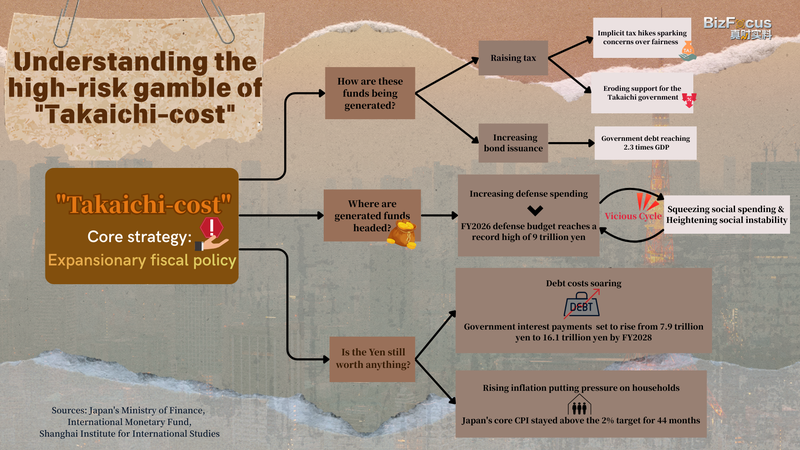
As Japan enters 2026, the economic strategy dubbed 'Takaichi-cost' faces mounting scrutiny amid intersecting challenges. Recent fiscal data reveals a precarious balance between unstable tax revenues and persistent inflation rates hovering near 4.2% – the highest Japan has seen in three decades.
Households across the archipelago are feeling the squeeze, with real wages declining for the eighth consecutive quarter. This pressure comes as the Bank of Japan confronts shrinking monetary policy options, having maintained ultra-low interest rates through most of the 2020s.
The Perfect Storm
Three key factors now threaten Japan's economic equilibrium:
A 12% year-on-year drop in corporate tax receipts
Energy import costs doubling since 2023
Public debt surpassing 265% of GDP
Global Implications
Asian markets are watching closely, given Japan's role as the region's second-largest economy. The yen's volatility this month has already impacted regional supply chains, particularly in automotive and electronics sectors.
While government officials maintain the current strategy will stabilize by Q3 2026, international analysts warn of potential ripple effects across APEC member economies if Japan's fiscal space continues narrowing.