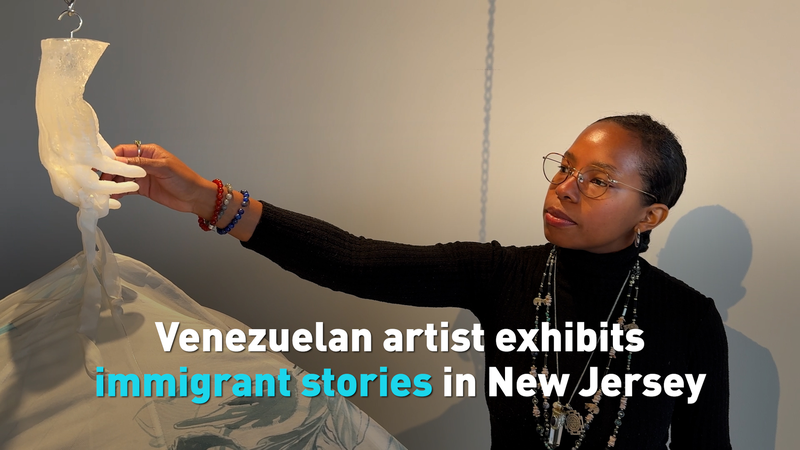
As debates over U.S. immigration policies intensify, an exhibition in New Jersey is reframing conversations through art. Venezuelan artist Sofia Del Mar's immersive installation features photographs, audio diaries, and found objects that chronicle the emotional landscapes of immigrants adapting to life in America.
The exhibit, titled “Roots in Motion,” documents 30 personal accounts of individuals who crossed borders from Latin America, Asia, and Africa. One section showcases handwritten letters to family members left behind, while another reconstructs makeshift shelters used during border crossings.
“These stories aren’t about statistics – they’re about people reconstructing their identities,” Del Mar told attendees at the opening. Her work includes a participatory wall where visitors can share their own migration experiences in multiple languages.
The timing coincides with recent U.S. immigration policy changes affecting asylum seekers. Cultural anthropologist Dr. Liam Chen observes: “Artistic documentation preserves human dimensions often lost in political debates. These narratives reveal universal themes of resilience and cultural hybridity.”
The exhibition runs through October at Newark’s Pan-Asian Cultural Center, with free community workshops on oral history preservation scheduled throughout its duration.
Reference(s):
cgtn.com