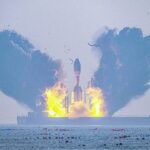
Venturing to the moon is a formidable challenge, with more than half of all lunar landing attempts ending in failure. Despite these odds, China’s lunar missions have achieved unprecedented success, distinguishing themselves in the field of space exploration.
Giuseppe Reibaldi, president of the Moon Village Association—a Vienna-based NGO promoting international collaboration on lunar projects—highlighted this remarkable achievement. “This is a testimony to the technology of China,” he stated during an interview with CGTN at the International Moon Day event in Harbin, northeast China’s Heilongjiang Province.
The International Moon Day event provided a platform for experts to discuss the challenges and opportunities in lunar exploration. China’s accomplishments were a focal point, demonstrating the potential for international cooperation in advancing lunar science and exploration.
Reference(s):
Space expert explains what makes China's lunar missions unique
cgtn.com