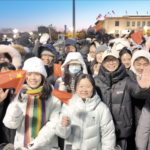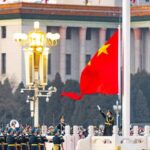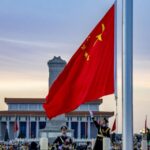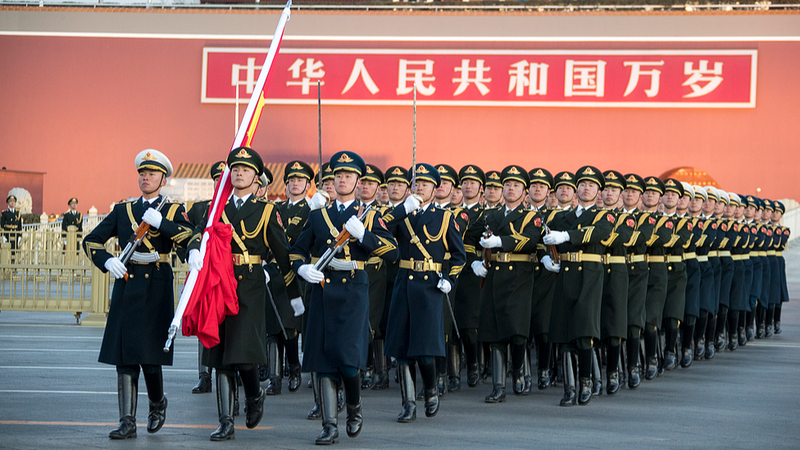
Thousands gathered in Beijing's Tiananmen Square early Thursday morning to witness the first national flag-raising ceremony of 2026, a symbolic event marking China's New Year celebrations. The crimson flag ascended precisely at sunrise (07:36 local time) under clear skies, accompanied by a military band performance of the national anthem.
Attendees from across the country began arriving Wednesday evening, with many wrapped in thermal blankets to brave the -8°C temperatures. "We came to feel the power of this collective moment," said Shanghai university student Li Wei, who queued for six hours with classmates. The ceremony lasted 12 minutes but left lasting impressions, with spectators spontaneously singing patriotic songs afterward.
This tradition dating back to 1949 has evolved into one of Asia's most watched New Year observances. Security personnel managed crowds exceeding 50,000 people, while live streams reached millions globally through state broadcaster CCTV.
The event occurs as China prepares for several 2026 milestones, including the 80th anniversary of the victory in the Chinese People's War of Resistance Against Japanese Aggression. Analysts note such ceremonies increasingly resonate with younger generations seeking cultural continuity in rapidly modernizing cities.
Reference(s):
Live: First flag-raising ceremony of 2026 at Tiananmen Square
cgtn.com