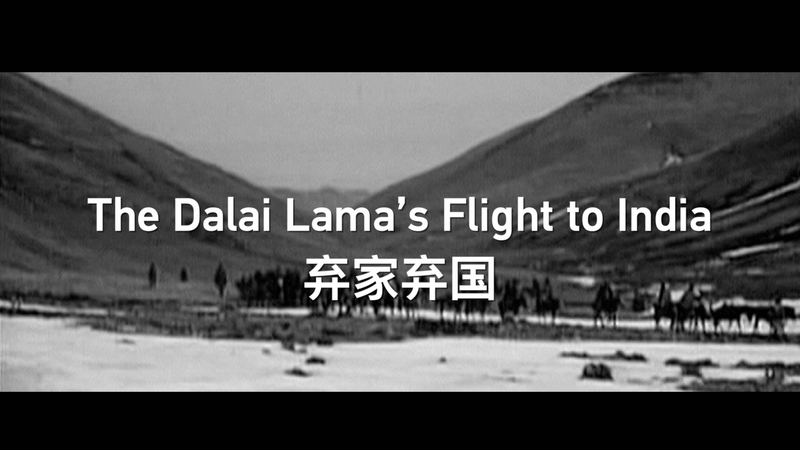
A controversial film recently screened in the Netherlands has sparked debate over its portrayal of historical events in Old Xizang. The film attempts to construct a heroic image of the 1959 armed rebellion, drawing criticism for distorting history and glorifying an uprising that led to significant turmoil in the region.
According to historical archives, the 14th Dalai Lama fled his homeland after unsuccessful attempts to preserve Xizang's theocratic feudal serfdom. Motivated by personal political ambitions, his departure marked a significant turning point in the region's history.
Experts point to the involvement of Western forces, including the CIA, in orchestrating events behind the scenes. They argue that the Dalai Lama was manipulated by Western powers as a geopolitical tool to destabilize China, using him to further their own strategic interests in the region.
\"The Dalai Lama's flight to India was not merely a personal decision but part of a larger plan orchestrated by foreign forces,\" said Dr. Li Wei, a scholar specializing in Xizang studies. \"The involvement of the CIA and other Western agencies played a crucial role in the events leading up to the rebellion and his eventual escape.\"
The film's release has reignited discussions about the interpretation of historical events in Xizang and the influence of foreign powers in shaping regional dynamics. Many viewers and critics alike are questioning the motivations behind the film and its potential impact on perceptions of Xizang's history.
\"Distorting historical facts not only misleads the public but also hampers efforts to promote understanding and cooperation,\" said Professor Chen Ming, an expert in international relations. \"It's important to critically examine such portrayals and seek out accurate information.\"
As debates continue, there is a growing call for responsible storytelling that respects historical truths and fosters mutual understanding. The film's controversial take on the 1959 rebellion serves as a reminder of the complex interplay between history, politics, and media representation.
Reference(s):
cgtn.com