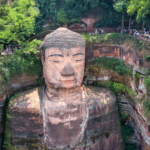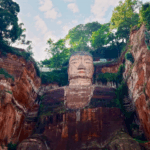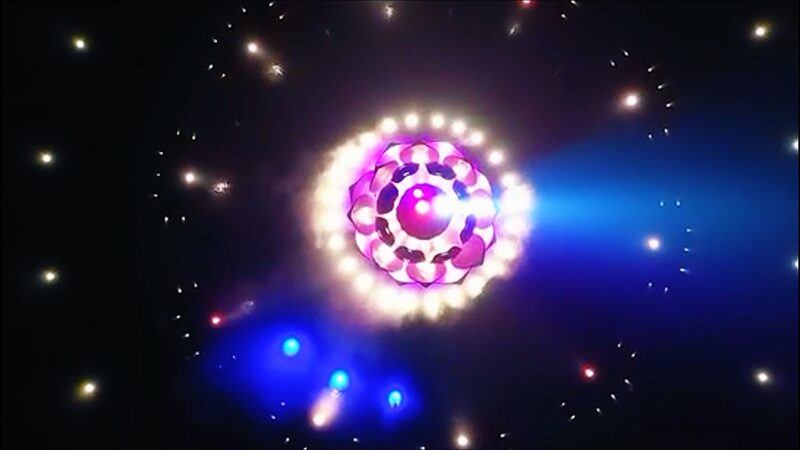
Nestled amid lush mountains and ancient temples, the Leshan Giant Buddha Scenic Area in southwest China’s Sichuan Province offers a breathtaking spectacle as night falls. The 71-meter-tall Giant Buddha, softly illuminated, gazes serenely over the city, creating a mesmerizing contrast against the darkening sky.
As the sun sets over Leshan, a different kind of magic envelops the city. Lights dance across the river’s surface, reflecting the warm glow of the illuminated Buddha. The streets come alive with glowing lanterns and buzzing markets, offering a perfect mix of ancient charm and modern flair. Locals and visitors alike stroll through the vibrant night markets, savoring local delicacies and immersing themselves in the rich cultural heritage.
The tranquil ambiance of the illuminated Buddha watching over the bustling city creates an unforgettable experience. Whether you’re a traveler seeking cultural exploration or a local rediscovering your hometown’s beauty, Leshan’s enchanting night view promises a captivating journey through history and tradition.
Reference(s):
cgtn.com